I once ran a self-defence workshop straight after a POSH session. The room had just heard what the law protects, what counts as harassment and how to raise a complaint. My job was the next question nobody had answered yet: what do you actually do in the moment itself?
That is the gap this article is about. POSH and self-defence training are not rivals, and one does not replace the other. They do different jobs, and a safe workplace needs both.
What POSH asks of employers
The Sexual Harassment of Women at Workplace (Prevention, Prohibition and Redressal) Act, 2013, known as POSH, makes a safe workplace a legal duty. Under Section 19, employers must set up an Internal Committee, display the consequences of harassment and organise workshops and awareness programmes for employees at regular intervals.
Two points matter here. First, the Act does not require self-defence training. POSH is about prevention, awareness and a fair process for complaints. Second, the Act says "regular intervals" but never fixes how often. Many organisations read that as once a year, or less.
What a policy cannot do in the moment
A policy tells people their rights and where to go afterwards. It cannot help someone whose wrist has just been grabbed in a parking lot, a cab or a corridor late at night. In that moment, what helps is the awareness to spot trouble early, the judgement to get away if you can and, when there is no way out, the skill and strength to protect yourself and get to safety.
That is where self-defence training fits. It supports the purpose of POSH, a workplace where people feel safe, by giving employees the skill and confidence to protect themselves when it matters.
Why techniques fall apart under stress
In every class and every workshop I see the same thing. When people practise a technique calmly, it is clean and precise. When I add pressure, noise, a time limit or a partner who keeps coming, almost everyone struggles to do the same technique.
That is not a failure. Stress changes how the body moves and how the mind decides. It is also why I am honest about something many trainers will not say: no amount of practice lets you perform every technique perfectly in a real situation. The other person is moving, reacting and changing the problem every second. You need simple responses that still work when the situation does not go to plan.
Who you train with matters too. Strength feels very different when someone is bigger and stronger than you, and different again when aggression is added. So we build towards practising with bigger, stronger partners, and women with male partners, step by step. You start in the shallow end and move to the deep end when you are ready.
Tell us about your team, and we will come back to you.
Write to usRequest a corporate proposalor call +91 94454 28378or fill in the enquiry formWhy one session is not enough
Many organisations already know that skill and law work best together. The problem is what happens next: one workshop, a photo for the newsletter, and the topic is closed for the year.
Why does this happen? Employment lawyers and HR writers point to the same reasons. Training is treated as a compliance box to tick. The annual report asks how many workshops were held, not what people can now do. Budgets are approved one event at a time. And because the law never defines "regular intervals", a single session can look like enough on paper.
A good workshop is the right place to start. But a session gives people information on one day, and a skill fades if it is never used again. Confidence that is never tested stays fragile.
What changes after a session
Even after one session, I see the shift in attitude. People leave thinking, "I have options. I am not helpless." They start noticing what could go wrong around them, and they make smarter choices: avoiding a risky situation when they can, and acting firmly when they must.
That is exactly what we want employees to learn. Not to look for a fight, but to know when to walk away, when to de-escalate and, when there is no other way, how to protect themselves.
How to make it last
- Pair it with your POSH sessions. Run self-defence alongside awareness training, so people learn both their rights and what to do in the moment.
- Make it regular. Short sessions through the year build more lasting skill than one long day. Our Year-Round Plan, with one session each quarter, is built for this.
- Add pressure, step by step. Calm practice first, then realistic pressure, so skills hold up when stress arrives.
- Train with realistic partners. Practising against bigger, stronger partners shows people what real strength feels like, safely.
- Measure what people can do. Count more than attendance. Ask employees how confident they feel before and after, and revisit it each quarter.
Common questions
Is self-defence training required under the POSH Act?
No. The Act requires awareness workshops and an Internal Committee, among other duties. Self-defence training is an addition that supports a safe workplace.
How often should employees train?
Regularly. One session starts the change in attitude; practice every few months keeps the skill alive.
How long is a session?
Our Employee Self-Defence and Resilience Programme runs in three formats: 2 hours, 4 hours and 8 hours (four 2-hour sessions). It is designed for women first, and we also run it for men or mixed teams.
When it matters
The law sets the standard. Practice builds the response. When both are in place, your people do not just hope they would cope. They know: I can.
Planning your next POSH or safety session? Request a 20-minute HR briefing and we will help you plan training that lasts beyond the day.
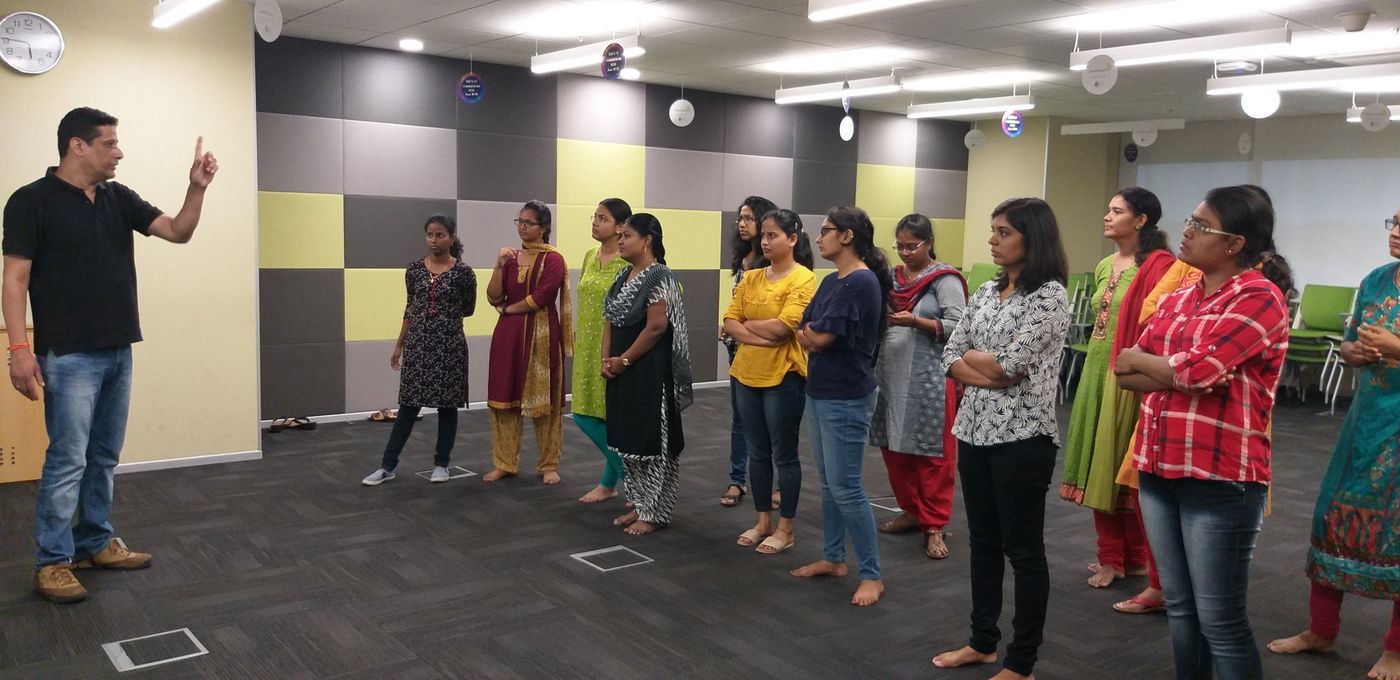
Gopal RaghavanFounder and Head Instructor, Raw Krav Maga
- Krav Maga Global Graduate Level 2 (G2), awarded by KMG Chief Instructor Eyal Yanilov.
- Certified Unarmed Self-Defence Instructor at NSQF Level 5, under Skill India (NSDC).
- Training in Krav Maga since 2009 and teaching since 2014, for teams from corporates and hospitals to personnel on two naval ships in Chennai.
Related: our guide for HR and Women's Day self-defence workshops.