What it is, and what it is not
Corporate self-defence training teaches employees practical skills for personal safety: noticing risk early, setting boundaries, staying calm under pressure and, when there is no other way, protecting themselves and getting away. It builds the confidence that comes from having practised, not just from having been told.
It stands on your POSH, transport and security policies, and it does not replace them. Policies set the rules. Skills get people home.
It is not a fitness class or a martial arts course either. Good training is built for people who sit at desks all day, and nobody needs to be fit to take part.
Who it helps
- People who commute late or alone, by cab, bus, train or on foot.
- Teams on night shifts and early starts.
- Staff who visit client sites, travel for work or stay in hotels.
- Roles that meet the public every day, from reception and sales to hospital staff.
- Women employees first, and men or mixed teams too.
Formats and time
Training usually comes in a few sizes. Ours are built from four modules:
- 2 hours: a first set of skills for everyone, and a strong start for a safety week or Women's Day.
- 4 hours: two modules in depth, such as awareness and escapes, in a single morning or afternoon.
- 8 hours: the full programme as four 2-hour sessions on dates HR chooses, with a programme completion certificate.
- The Year-Round Plan: one session each quarter, so people keep practising across the year.
A single session raises awareness. Repeated, practical training builds skill and confidence.
Tell us about your team, and we will come back to you.
Write to usRequest a corporate proposalor call +91 94454 28378or fill in the enquiry formWhat good training looks like
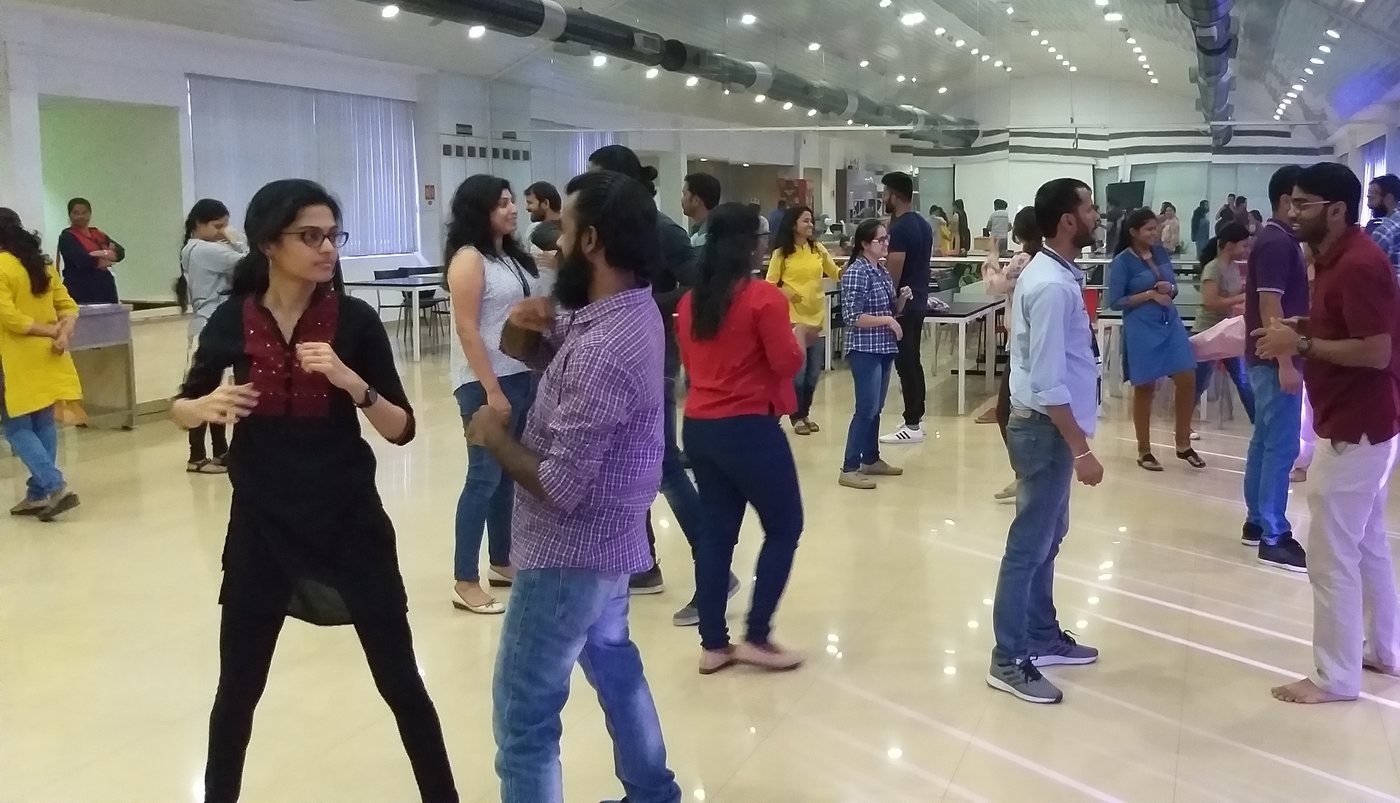
- Everyone practises. Nobody sits at the back and watches.
- It goes step by step: simple skills first, with pressure added only when people are ready.
- Every drill is supervised, and anyone can stop at any moment.
- It starts with awareness and judgement: when to walk away, de-escalate or get help. Physical defence is the last layer.
- Skills are tested under realistic pressure, because techniques learned in a calm room can disappear when adrenaline rises.
- The change is measured before and after, and reported to HR.
Ten questions to ask any trainer
- Who will lead the sessions, and what are their credentials and teaching experience?
- Will every participant practise, or will most of them watch a demonstration?
- How many trainers will be in the room for a group of our size?
- How do you keep people safe, and can anyone stop at any time?
- Do you ask about injuries or health conditions beforehand, and adapt the drills?
- Can you run a women-only group, and also run it for men or mixed teams?
- Is the training built around our people's real situations: commutes, shifts and client sites?
- How do you test whether the skills hold under pressure?
- How will you measure the change, and what will HR receive, and when?
- How do we keep the skills going after the first session?
What HR should receive afterwards
Training should leave you with evidence of what changed. With our programme, HR receives:
- A short anonymous survey before and after, reported only as group results.
- Skill observation under pressure.
- An outcome report within 7 days, and a results call with HR.
- A four-week follow-up to see what lasted.
How we can help
We run the Employee Self-Defence and Resilience Programme for women employees, and for men or mixed teams. It is led by Gopal Raghavan, founder of Raw Krav Maga, a Krav Maga Global Graduate Level 2 (G2) and a Certified Unarmed Self-Defence Instructor at NSQF Level 5, under Skill India, teaching since 2014. We have delivered 60+ workshops for 30+ organisations, and trained personnel on two naval ships in Chennai.
We are based in Chennai and work across Tamil Nadu. For corporate teams, we also travel to Bangalore and Hyderabad.
Questions HR teams ask
Does self-defence training replace our POSH programme?
No. It stands on POSH and your safety policies. POSH sets the rules and the process. Self-defence training gives people practical skills for the moment itself.
Will our employees get hurt?
Good training is built so that they do not. Drills are supervised and built up step by step, nobody is pushed beyond what they can do, and anyone can stop at any moment. Tell the trainer about any injuries or health conditions beforehand.
How many people can train at once?
For hands-on training, groups of 20 to 30 work well, so that everyone practises. For a larger team, plan several groups.
When should we plan it?
Many companies plan for Women's Day in March, and those dates go first. Writing to us in December or January gives you the widest choice.
What does corporate self-defence training cost?
It depends on the format, the group size and the location. We share the fee in a proposal, after a short conversation about your team.